
When to Winterize Your Sprinkler System in New Jersey (2026 Timing Guide)
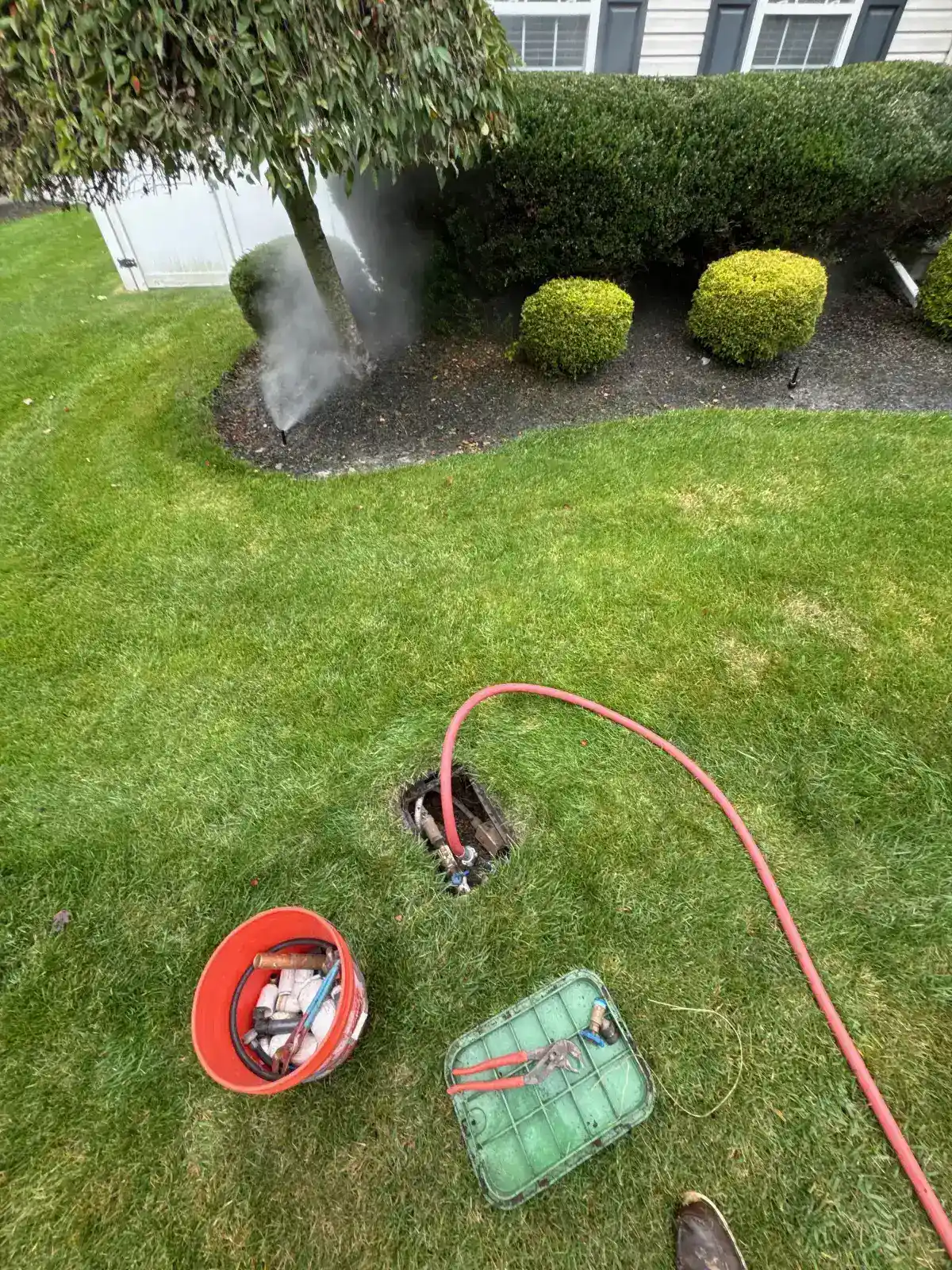
In New Jersey, you should winterize your sprinkler system between late October and mid-November — ideally before the first hard freeze when temperatures drop below 28°F for more than 4 hours. Most South Jersey homeowners schedule winterization in the first two weeks of November. Wait too long and you risk frozen pipes, cracked valves, and repair bills that far exceed the cost of a simple blowout.
We have been winterizing sprinkler systems across South Jersey since 2012. Here is everything you need to know about timing, the process, and why skipping this step is one of the most expensive mistakes a homeowner can make.
NJ Freeze Timing by Region
New Jersey spans three USDA hardiness zones, and freeze timing varies significantly between the northern mountains and the southern coast. Here is what typical first-freeze dates look like across the state:
| Region | Typical First Hard Freeze | Recommended Winterization Window |
|---|---|---|
| North Jersey (Sussex, Morris, Warren) | Mid to late October | Early to mid-October |
| Central Jersey (Mercer, Middlesex, Monmouth) | Late October to early November | Mid to late October |
| South Jersey inland (Gloucester, Camden, Burlington) | Early to mid-November | Late October to early November |
| South Jersey coastal (Atlantic, Cape May) | Mid to late November | Early to mid-November |
South Jersey benefits from milder fall temperatures compared to the rest of the state, but that can be misleading. A sudden cold snap in early November can drop temperatures well below freezing overnight, even in coastal areas. The safest strategy is to schedule your winterization before the end of October or within the first week of November.
Signs It Is Time to Winterize
You do not need to be a weather expert to know when winterization is due. Watch for these indicators:
- Overnight temperatures consistently below 37°F — Once nighttime lows regularly dip into the mid-30s, freezing conditions are imminent.
- Your lawn has stopped growing — When grass goes dormant, it no longer needs supplemental watering. Continuing to run your system wastes water and risks freeze damage.
- Leaves have fallen — In South Jersey, peak leaf drop typically happens in late October through mid-November. This is nature's signal that winter is approaching.
- The local weather forecast shows freezing overnight lows — Even one night below 28°F can damage unprotected irrigation components.
What Happens During a Professional Winterization
A professional sprinkler winterization — sometimes called a "blowout" — removes all water from your irrigation system using compressed air. Here is the step-by-step process our team follows:
- Shut off the water supply — The main water valve to the irrigation system is closed to prevent new water from entering the lines.
- Drain the backflow preventer — The backflow preventer is drained and its test cocks are opened to prevent freeze damage to this critical component.
- Connect the air compressor — A commercial-grade air compressor (80-100+ CFM) is connected to the system through the mainline or a designated blowout port.
- Blow out each zone individually — Starting with the zone farthest from the compressor, each zone is activated and blown out until no water is visible at any sprinkler head. This typically takes 2-3 minutes per zone.
- Shut down the controller — The irrigation controller is set to "off" or "rain" mode to prevent it from trying to activate zones during winter.
- Final inspection — We verify that all zones have been cleared, all drain valves are open, and the backflow preventer is properly winterized.
The entire process takes 30-60 minutes for a typical residential system, depending on the number of zones.
The Cost of Skipping Winterization
A professional winterization costs between $75 and $150 for most residential systems. Skipping it can result in repair costs that are 5 to 20 times higher. Here is what freeze damage actually looks like:
| Type of Damage | Typical Repair Cost |
|---|---|
| Cracked PVC mainline | $200 - $800 |
| Split lateral pipe (per section) | $150 - $400 |
| Cracked sprinkler heads (multiple) | $100 - $300 |
| Damaged valve diaphragm (per valve) | $100 - $250 |
| Cracked backflow preventer | $300 - $1,200 |
| Complete system failure (multiple components) | $1,500 - $3,000+ |
The backflow preventer is especially vulnerable because it is typically installed above ground. A single hard freeze can crack the brass body, requiring full replacement — and in New Jersey, this replacement must be done by a licensed contractor and inspected by the municipality.
Can You Winterize Your Sprinkler System Yourself?
Technically, yes. Practically, it is difficult to do correctly without the right equipment.
The most common mistake homeowners make is using an air compressor that is too small. A typical shop compressor produces 2-5 CFM at 90 PSI. A proper irrigation blowout requires 80-100+ CFM at 50-80 PSI. Using too much pressure damages components. Using too little airflow leaves water in the lines — which defeats the entire purpose.
Renting a commercial air compressor capable of handling irrigation blowouts costs $150 to $250 per day. That is already more than a professional winterization service, and you still need to know the correct PSI settings for your pipe material (PVC vs poly), the proper sequence for blowing out zones, and how to drain the backflow preventer without damaging the internal seals.
For most homeowners, professional winterization is both safer and more cost-effective than attempting it yourself.
What Comes After Winterization?
Once your system is winterized, it stays shut down through the winter months. In the spring, typically between late March and mid-April in South Jersey, you will want a spring start-up service. During the start-up, we gradually re-pressurize the system, check for any winter damage, clean filters, adjust heads that may have shifted, and reprogram your controller for the growing season.
Many of our customers schedule both winterization and spring start-up as part of an annual maintenance plan. This ensures your system is properly shut down each fall and brought back online each spring without you having to remember to call.
Schedule Your Winterization Early
October and November are our busiest months for winterization. Slots fill up fast, especially in the first two weeks of November when most South Jersey homeowners realize it is time. We recommend booking your winterization appointment by mid-October to secure your preferred date.
Irrigation Innovations serves all seven South Jersey counties — Gloucester, Camden, Burlington, Atlantic, Salem, Cumberland, and Cape May. We guarantee our winterization service, assuming the system was installed properly and is in good working condition.