
What Determines the Cost of a Sprinkler Repair?
The short answer
There is no dependable flat price for every sprinkler repair. A visible broken head is usually a smaller job than locating a buried wire fault, opening a hard-to-reach valve box, or excavating a leaking main line. The final cost depends on diagnostic time, access, the failed component, how many zones are affected, and whether compatible parts are available.
Irrigation Innovations has served Gloucester County and six other South Jersey service areas since 2012. The planning ranges below can help you compare repair scopes, but they are not a price list or a quote. A technician still needs to test the system and confirm the cause before giving you a reliable local estimate.
Repair Cost Breakdown by Type
Published repair-cost guides use broad ranges because a part that is easy to reach can take far less work than the same part under roots, compacted soil, or hardscape. Use these figures for early budgeting only; ask what parts, labor, diagnostics, and restoration are included in your estimate.
| Repair Type | Cost Range | What's Involved |
|---|---|---|
| Broken sprinkler head (single) | $65 - $150 | Remove damaged head, install replacement, adjust spray pattern |
| Multiple sprinkler heads (3-5) | $150 - $350 | Batch replacement, often done during seasonal start-up |
| Leaking valve | $150 - $300 | Diaphragm replacement or full valve swap, test zone operation |
| Valve box replacement | $75 - $200 | Replace cracked or sunken valve box, re-level for access |
| Controller/timer replacement | $100 - $250 | Remove old unit, install new controller, program zones |
| Smart controller upgrade | $200 - $450 | Install Wi-Fi controller, configure app, set weather-based schedule |
| Pipe repair (lateral line) | $150 - $400 | Excavate, cut out damaged section, splice in new pipe |
| Main line repair | $250 - $600 | Locate leak, excavate, repair or replace main line section |
| Backflow preventer repair | $150 - $350 | Rebuild kit or full replacement, required annual testing in some municipalities |
| Backflow preventer replacement | $300 - $1,200 | Full unit replacement — required when body is cracked |
| Wire or solenoid repair | $100 - $250 | Locate damaged wire, splice, or replace solenoid on valve |
| Rain sensor replacement | $75 - $150 | Replace sensor unit, test integration with controller |
The same symptom can lead to very different work. Low pressure in one zone might come from a clogged nozzle, a leaking lateral line, a valve that does not open fully, or a wiring problem. Testing the affected zone before replacing parts helps keep the estimate tied to the actual failure.
Most Common Sprinkler Problems and Their Causes
Broken or Stuck Sprinkler Heads
Sprinkler heads can break from lawnmower strikes, foot traffic, vehicle tires near driveway edges, and freeze damage. Pop-up heads can also stick when dirt or debris reaches the riser seal. The repair scope depends on whether only the head is damaged or the fitting and pipe below it also need attention.
Leaking Valves
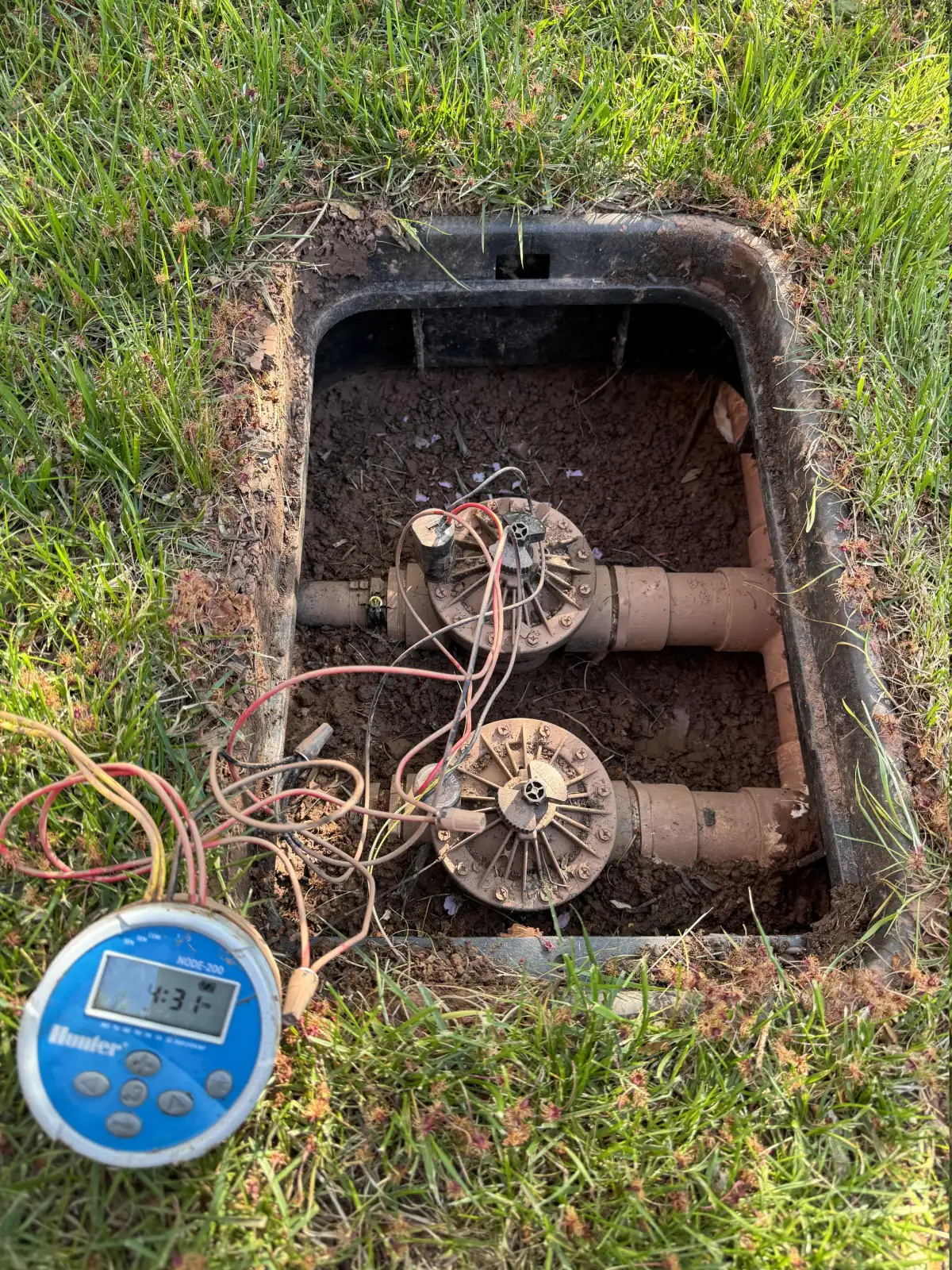
Zone valves control water flow to each section of your system. Over time, the rubber diaphragm inside the valve wears out and stops sealing properly. Symptoms include a zone that will not shut off completely, water seeping around the valve box, or low pressure in one zone. A diaphragm replacement is a quick fix. If the valve body itself is cracked, the entire valve needs replacement.
Pipe Leaks and Breaks
Underground pipe leaks are often caused by root intrusion, ground settling, freeze damage, or impact from landscaping equipment. Signs include unexpectedly soggy areas, higher-than-normal water bills, or a zone with noticeably low pressure. Locating the leak requires some detective work — our team uses pressure testing and visual inspection to narrow down the location before digging.
Controller Failures
Common controller symptoms include blank displays, zones that will not activate, or programming that resets itself. The controller is not always the cause: a field-wire fault, failed solenoid, or sensor problem can produce similar behavior. If the controller itself has failed, compare replacement with a smart irrigation upgrade instead of paying to troubleshoot an obsolete model.
Wiring Issues
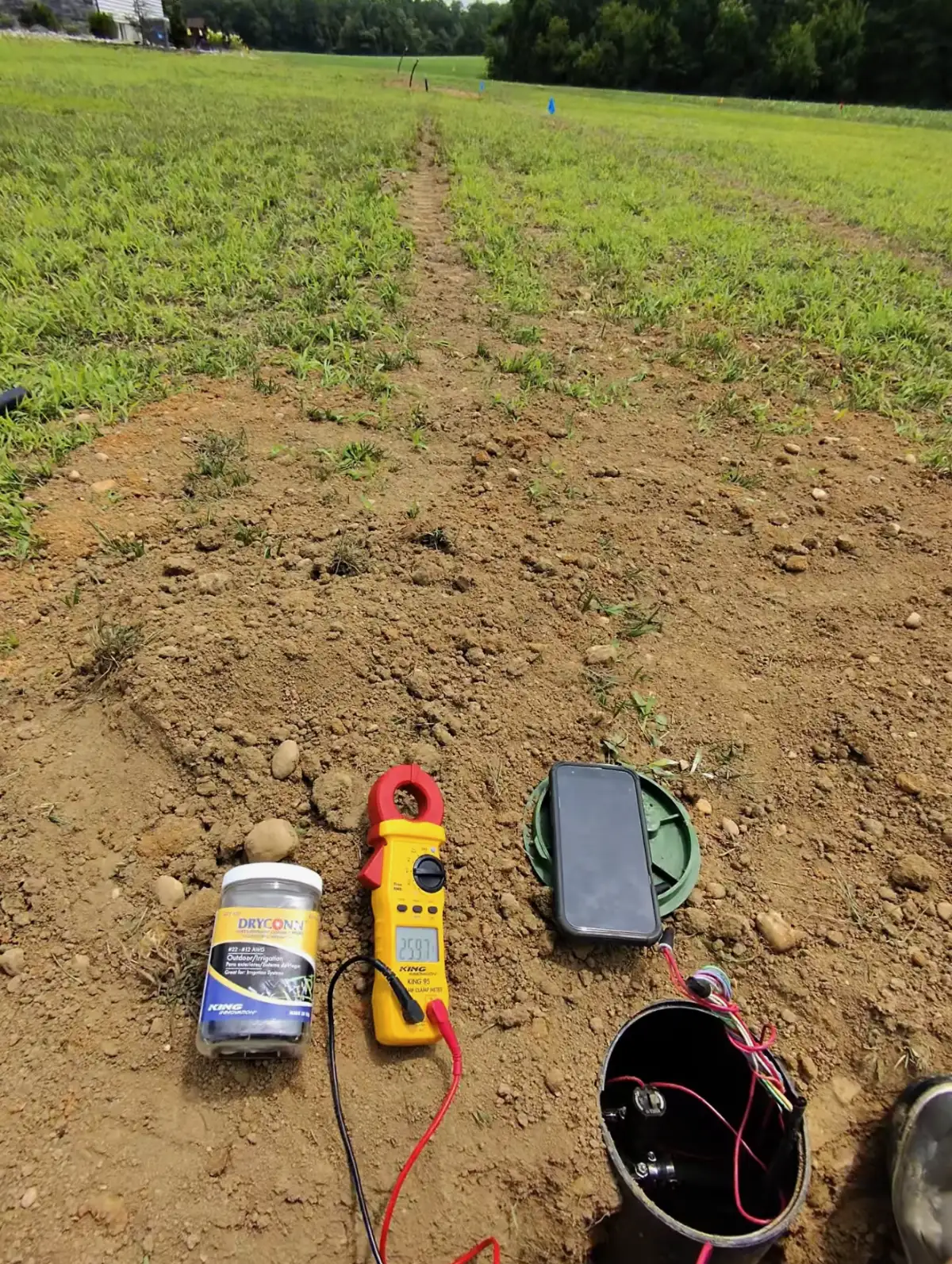
The low-voltage wiring that connects your controller to each zone valve runs underground and is vulnerable to damage from digging, rodents, and moisture. A damaged wire causes a specific zone to stop responding to the controller. Locating the break requires specialized equipment, but the repair itself — splicing and waterproofing the wire — is relatively simple once found.
How to Identify Sprinkler Problems Early
Catching problems early almost always reduces repair costs. Here are the warning signs to watch for:
- Dry spots on your lawn — Persistent brown patches in an otherwise green lawn often indicate a head that is not popping up, a clogged nozzle, or a coverage gap.
- Soggy areas or standing water — Water pooling where it should not be suggests a pipe leak, a stuck valve, or a head that is spraying in the wrong direction.
- Unusually high water bill — A sudden spike in water usage often means a leak in the system, sometimes in the main line where a large volume of water can escape unnoticed.
- Low pressure in one zone — If a single zone has weak coverage while others work fine, the problem is likely a leak, a partially closed valve, or a broken pipe in that zone's circuit.
- Sputtering or uneven spray — Air in the lines, clogged nozzles, or worn head internals cause inconsistent spray patterns.
- System will not turn on or off — This points to a controller issue, a wiring problem, or a failed master valve.
When to Repair vs. When to Replace
Many older systems can be repaired when the problem is isolated and compatible parts are available. Replacement becomes worth comparing when failures keep returning, several zones have problems, or the original layout no longer waters the yard evenly.
Consider Repairing If:
- The issue is isolated to one zone or component
- The main lines and most valves remain in good condition
- Compatible replacement parts are readily available
- Coverage was satisfactory before the current failure
Consider Replacing If:
- You are calling for repairs repeatedly
- Multiple zones have problems simultaneously
- Pipes, valves, wiring, and controls are failing in several places
- Water coverage is poor despite repeated adjustments
- The yard or planting layout has changed enough that the original zoning no longer fits
Ask for the immediate repair cost and, when appropriate, a separate replacement option. Comparing those scopes side by side is more useful than relying on system age alone. A new installation can improve zoning and coverage, while a focused repair avoids replacing components that still work.
Emergency Repair Situations
Some sprinkler problems require immediate attention to prevent water damage or a sky-high water bill:
- Main line break — If water is gushing from the ground when the system is on, or continues when the controller is off, shut off the irrigation supply and request service.
- Backflow preventer leak — Water spraying from the backflow preventer means the seals or body have failed. Shut off the supply valve upstream and contact a licensed contractor.
- Zone will not shut off — A stuck valve that keeps one zone running indefinitely wastes water and can flood that area of your yard. Turn off the controller and close the main supply until the valve can be repaired.
For all of these situations, we recommend shutting off the water supply to the irrigation system as your first step. The shutoff valve is typically located near your water meter or where the irrigation supply line branches off from your house plumbing.
Sprinkler System Maintenance Costs
Preventive service can catch tilted heads, clogged nozzles, weak spray patterns, controller errors, and small leaks before they become larger repair calls. The price of an irrigation maintenance visit depends on the number of zones, the checks requested, and whether repair parts are needed.
Useful service points include a spring start-up after winter, a mid-season coverage check when the system is working hardest, and fall winterization before freezing weather. Ask for repair items to be listed separately from routine adjustments so you can see what is affecting the total.
Sprinkler System Replacement and Removal Costs
When repair costs keep adding up or the original layout no longer fits the yard, compare the repair with a separate sprinkler installation estimate. Replacement pricing depends on the water source, pressure, lot size, number of zones, turf and planting-bed layout, hardscape crossings, controller choice, and how much of the existing system can remain.
Full removal is a different scope from replacement. It may involve isolating the irrigation supply, removing accessible controls and backflow components, capping lines, and deciding how to handle buried pipe and valve boxes. Because site conditions and municipal requirements vary, that work needs its own estimate rather than a generic allowance.
If you are weighing continued repairs against replacement, bring any recent repair history to the estimate. Repeated valve, wiring, pipe, and coverage problems provide more useful decision context than age alone. For a broader budgeting comparison, read our guide to irrigation system installation cost in New Jersey.
How South Jersey Seasons Affect Repair Needs
Repair needs in South Jersey often follow a seasonal pattern. Spring start-up can reveal cracked fittings, backflow damage, or heads shifted during winter. The total depends on what testing reveals, not simply the month on the calendar.
During summer, mower damage, clogged nozzles, weak coverage, and scheduling problems become easier to see because the system is running regularly. A mid-season check can separate a simple adjustment from a leaking line or weak valve.
Fall problems can be urgent. A valve that sticks open going into winter can prevent proper winterization, and a leaking main line should be addressed before the system is blown out. Handling those issues before your winterization appointment helps the technician clear and shut down the system properly.
What a Repair Estimate Should Clarify
A useful repair estimate should identify the failed component or diagnostic scope, explain whether excavation or wire tracing is expected, and distinguish immediate repairs from optional improvements. If a replacement part has its own manufacturer coverage or a labor warranty applies, ask for those terms in writing with the estimate.
It should also explain whether the proposed part matches the pressure, spray pattern, wiring, and controller already in your system. A compatible repair helps the affected zone work with the rest of the yard instead of creating a new coverage problem.
Get a Diagnosis for Your Sprinkler Issue
If your sprinkler system is showing any of the symptoms above, addressing it early can limit water loss and landscape stress. A broken head can leave dry spots, while a stuck valve can keep using water until the irrigation supply is shut off.
Irrigation Innovations provides professional sprinkler repair across all seven South Jersey counties. Call us to describe the issue and we will give you a realistic idea of what to expect before we arrive.
Sprinkler Repair Cost Questions
How much should a sprinkler repair cost?
The cost should reflect the confirmed failure, access to the component, parts, labor, and any testing needed after the repair. Replacing one accessible head is a different scope from tracing a buried wire fault or repairing a main line. Use published ranges as planning context, then request a local estimate tied to your system.
How much does it cost to rewire a sprinkler system?
Rewiring cost depends on whether the problem is one exposed splice, a failed solenoid connection, a buried break that must be located, or aging wire across several zones. Controller access, route length, hardscape, roots, and the number of affected zones all change the labor involved.
Can an old sprinkler system be repaired?
Often, yes. An older system can still be a good repair candidate when the failure is isolated, compatible parts are available, and the remaining zones provide acceptable coverage. Repeated pipe, valve, wiring, and controller failures are reasons to compare repair with a redesigned system.
What is the typical life expectancy of a sprinkler system?
There is no single useful age for the entire system because pipe, valves, heads, wiring, sensors, and controllers wear differently. Installation quality, soil movement, winterization, water conditions, mower damage, and maintenance all affect service life. A zone-by-zone evaluation is more informative than age alone.